
Art in Specificity and Context, After Millais: The Blind Girl (2021)
Nov 27, 2024
Long granted the status of being a ‘pioneer’ artist, or ‘first generation’, in the local art historical narrative, Liu Kang is no doubt a well-established and salient figure in the arts of Singapore. Alongside Chen Chong Swee, Cheong Soo Pieng, and Chen Wen Hsi - this group of fellow contemporaries were all part of the large population of Chinese émigrés who sojourned southwards, before and during the Second World War, to the region, where they ultimately settled and continued to work as professional artists (the extended list includes Lim Hak Tai, Lim Cheng Hoe, and Georgette Chen). From this lineup, Liu Kang’s name seems to come to the fore …
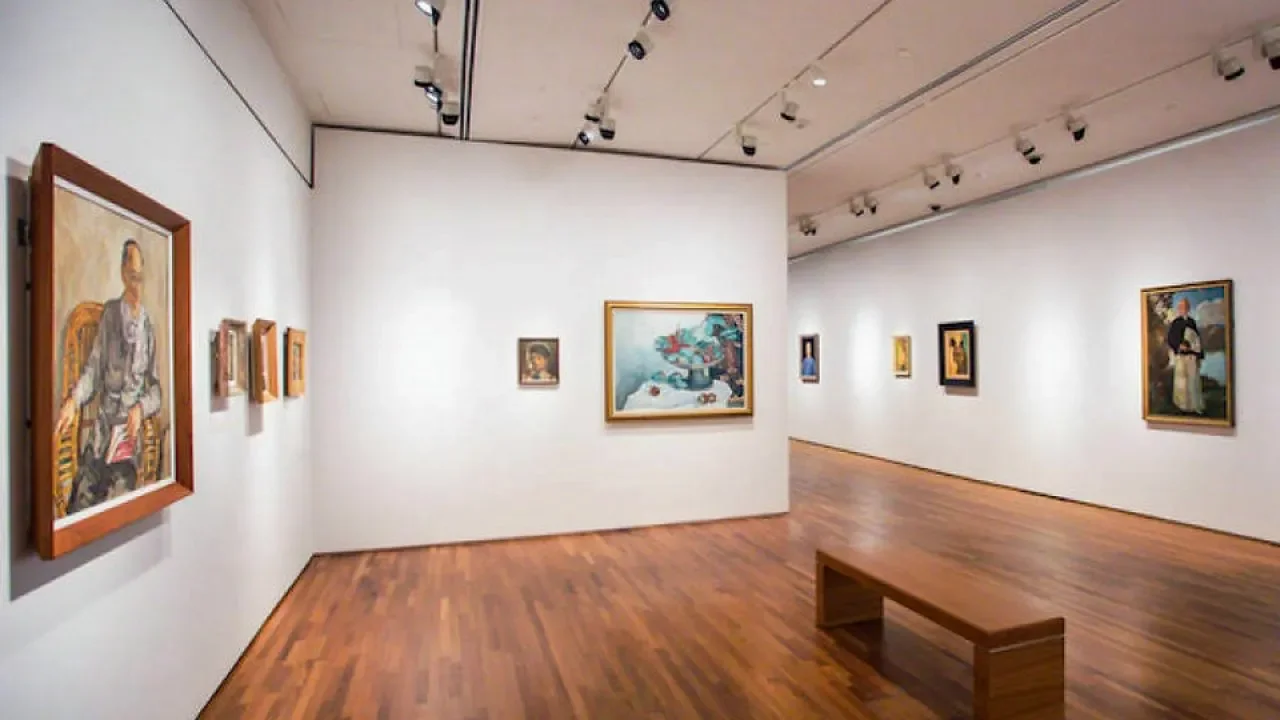
View of National Gallery Singapore (https://www.nationalgallery.sg/singapore-nanyang-reverie)
On the second floor of the National Gallery Singapore, where the permanent showcase of approximately 300 pieces from the National Collection and other sources, ‘Siapa Nama Kamu? Art in Singapore since the 19th Century’,¹ is on display - there is a dedicated area labeled ‘Liu Kang Gallery’ within the DBS Singapore Gallery. The art here spans from the 1930s to 1970s, making up the ‘Nanyang Reverie’,² and focuses on how artists then sought to explore, realise and infuse a new locale aesthetic and identity into their works. Moreover, planned in partnership with the artist’s family, the Liu Kang Annual Lecture series,³ is a signature programme which features an invited speaker - who presents new research on a culturally significant and critical period in Singapore’s art history and development. By close association, these established fixtures not only serve to commemorate the pioneer artist’s role in the development of modern art in Singapore but also posthumously aligns Liu Kang, and his name, continually with pivotal moments in art and history to constructs a narrative and legacy of the artist as a figure worthy of being remembered.
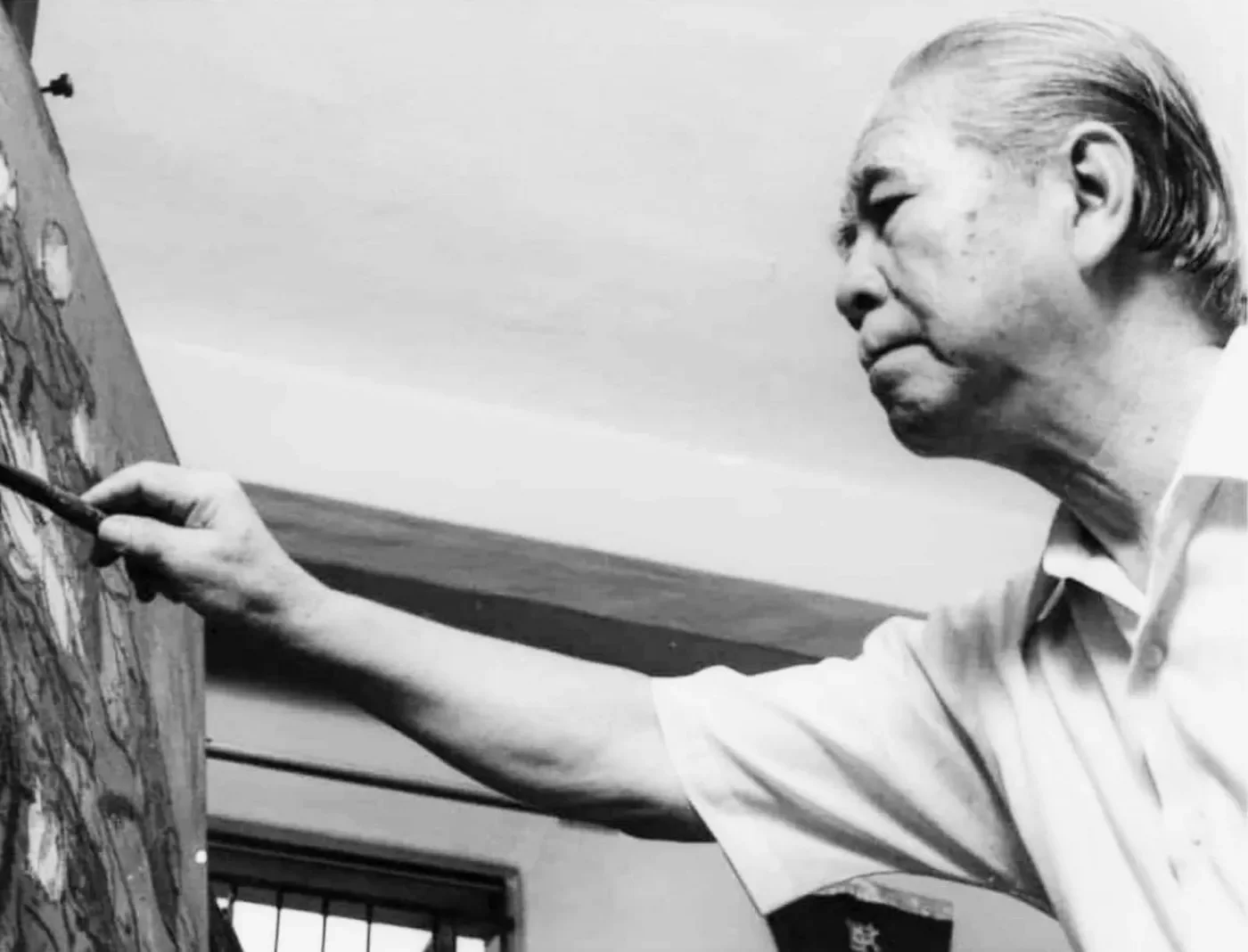
Liu Kang 刘抗 (1911–2004) was born in Fujian province, China, and spent his early years in Maur, Johor, before heading to Shanghai, where he formally received his foundational arts training at Xinhua Art Academy. From 1929 to 1933, the artist continued his art education in Paris, France, at the Académie de la Grande Chaumière - after which, he returned to Shanghai and taught western art painting at Shanghai College of Fine Arts.⁴ Seductively called the ‘Paris of the East’, in the 1930s, Shanghai was indisputably known as a urbanising and cosmopolitan city centre - it was in this stimulating and technologically-advancing environment where the young artist was exposed to an understanding of both western and eastern art. Combining this with the four-to-five-years he spent in France, Liu Kang’s formative experience boasts an art education received from both capital cultures of the East and the West, at the time. This background critically formed the basis of his artistic technique, practice and attitude.
However, at the outbreak of the Sino-Japanese war, Liu Kang found himself returning to Malaya in 1937, while he was in his mid-twenties, to escape the conflict. Shortly after, the artist and his wife made their way down to Singapore, where they eventually remained and where Liu Kang began his long artistic career, in teaching and as a professional. The impact and influence that the artist, who has thereafter been conferred the status of ‘pioneer’, holds cannot be understated - as he, among the others similarly recognised, have trained and tutored a significant number of following art students. Regarded as a guiding figure in the Singaporean art scene, Liu Kang has also been credited with numerous contributions locally, received awards that reflected these endeavours accordingly, and played a leading role as the appointed President of the Society of Chinese Artists and the Singapore Art Society for a substantial amount of his career. Lastly, as a part of the large population of Chinese émigrés, (or huaqiao, 华侨), who migrated out of their homeland in search of a new home in the British colony, Liu Kang’s career as an artist is closely affiliated with the development of the Nanyang School of Art in Singapore.
Nanyang is a locally familiar prefix - it reverberates through the names of companies and organisations, such as Nanyang Siang Pau (南洋商报),⁵ and educational institutions, like Nanyang Polytechnic (NYP), Nanyang Technological University (NTU), and, of course, Nanyang Academy of Fine Arts (NAFA). Literally translating to the ‘South Seas’, Nanyang 南洋, is an old Chinese trading denomination for the South East Asia region - it takes its reference point from the geographical position of China and roughly encompasses the area where the Chinese traded, which includes Thailand, Indonesia, Singapore, Malaya (now Malaysia) and the Philippines. The term can be traced back to the late 1930s, or pre-war Singapore, and was commonly adopted amongst the Chinese-speaking literary and art circles - who, at the time, ‘urged one another to explore localised forms of literary and artistic expression’⁶ - to reflect the geographical region where they settled. Although the term, with its sinocentric implications, is less used in this context anymore; it continues to evoke a history of immigrant Chinese cultural identity in the region and, in the art historical context, has gone on to imply a conscious attempt by artists to create a local art discourse.
The 1950s were a period of social unrest in Singapore as strives for independence and ideals of regionalism were on the rise amidst growing anti-colonial sentiments amongst the people following the end of the war and mounting doubt with the British administration. NAFA, which opened in 1938 with artist Lim Hak Tai as the founding principal,⁷ resumed classes after being closed due to the Japanese Occupation. In 1955, Lim Hak Tai articulated his precepts for young artists, which included an invocation to ‘integrate the cultures and customs of the various races’ and ‘express the local flavour through art’.⁸ Liu Kang was one of the initial few artists who responded to this call and espoused the artistic push for a ‘local’ aesthetic - one removed from any obligations to established art traditions from his education. These developments could be seen as a progression from these Chinese émigrés’ diaspora status as they would not only, likely, have had a well-traveled past;⁹ but also, through these circumstances, would have had to negotiate with various identities before finding a permanent place to live, work, and return to.
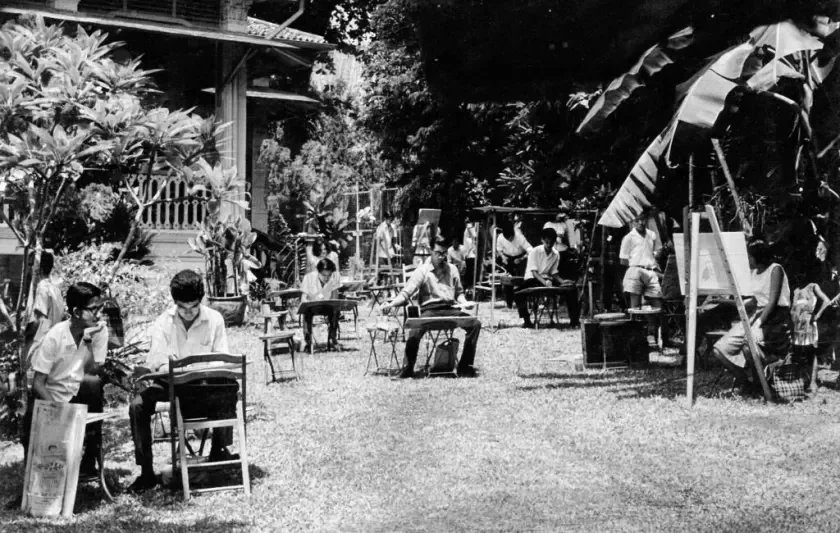
Outdoor western painting class @ St Thomas. Image Source (Nanyang Academy of Fine Arts)
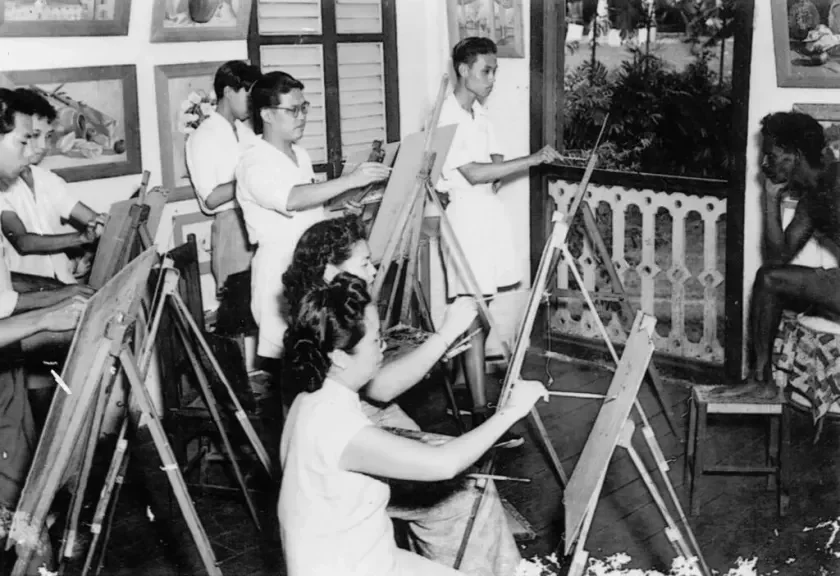
Western painting class in St. Thomas Campus. Image Source (Nanyang Academy of Fine Arts)
It is within this specific historical and social environment that the forging of a distinctively local and regional art discourse became an important issue for these sojourners. Thus the so-called ‘Nanyang art’, or feng’ge (风格), can be scarcely understood on this ambiguous notion of ‘localness’.¹⁰
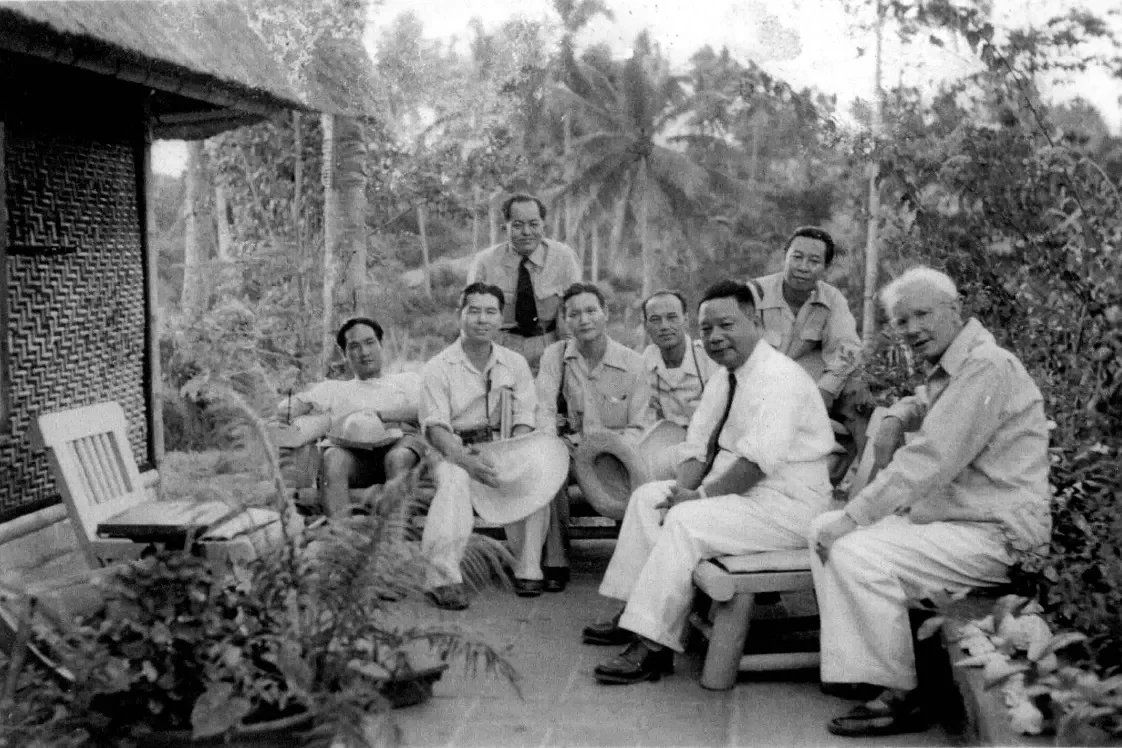
Chen Wen Hsi, Liu Kang, Cheong Soo Pieng, Luo Ming, Chen Chong Swee, Zhou Bichu at Rudolf Bonnet’s house, Bali, July 1952. Digitised by National Gallery Singapore Library & Archive with kind permission from Chen Chi Sing @ Tan Chay Lee. RC-S1-CCS2.18 (https://www.nationalgallery.sg/discover-learn/rotunda-library-archive)
Notably, art historians, Redza Piyadasa and T.K. Sabapathy, were the first scholars who attempted to consolidate and classify the artistic approaches observed in a group of artists which they deemed belonged to the ‘Nanyang School’ or ‘Style’ in 1979. A seminal survey exhibition was organised and held at the Muzium Seni Negara, Malaysia that year - in the accompanying texts, Sabapathy brought attention to the pictorial schemes engaged by these Chinese migrant artists and made the claim that their artistic approaches could be derived from two sources: the School of Paris styles and Chinese ink tradition.¹¹ Such sentiments were further emphasised by the presence of a seemingly cohesive subject matter found in the artworks as they tended to portray ‘local themes’, the landscape and peoples.
The Pictures of Bali exhibition held over 10 days in 1953 at the British Council in Singapore has been hailed as a catalytic occasion in the establishment and narrative of the Nanyang school. The significant amount of pieces on show, featuring various mediums, portrayed the primitive and pastoral Bali in a modernist style,¹² - and were the output produced from the landmark Bali trip undertaken by the four early ‘pioneer’ artists mentioned earlier, in the year prior. The two-months long expedition to Indonesia featured an extended period in Bali and has been often remarked to be heavily inspired by Gauguin’s time spent in Tahiti in the late nineteenth-century. With Liu Kang’s works often being described as ‘post-Impressionistic and Fauvist’ influenced,¹³ alongside his time spent studying art in Paris, there is little doubt that the artist was exposed to and familiar with the artworks and motivations of the French modernists. Following suit, in their search for a ‘local colour’, Liu Kang and his other artist friends went beyond Malaya to seek inspiration elsewhere.
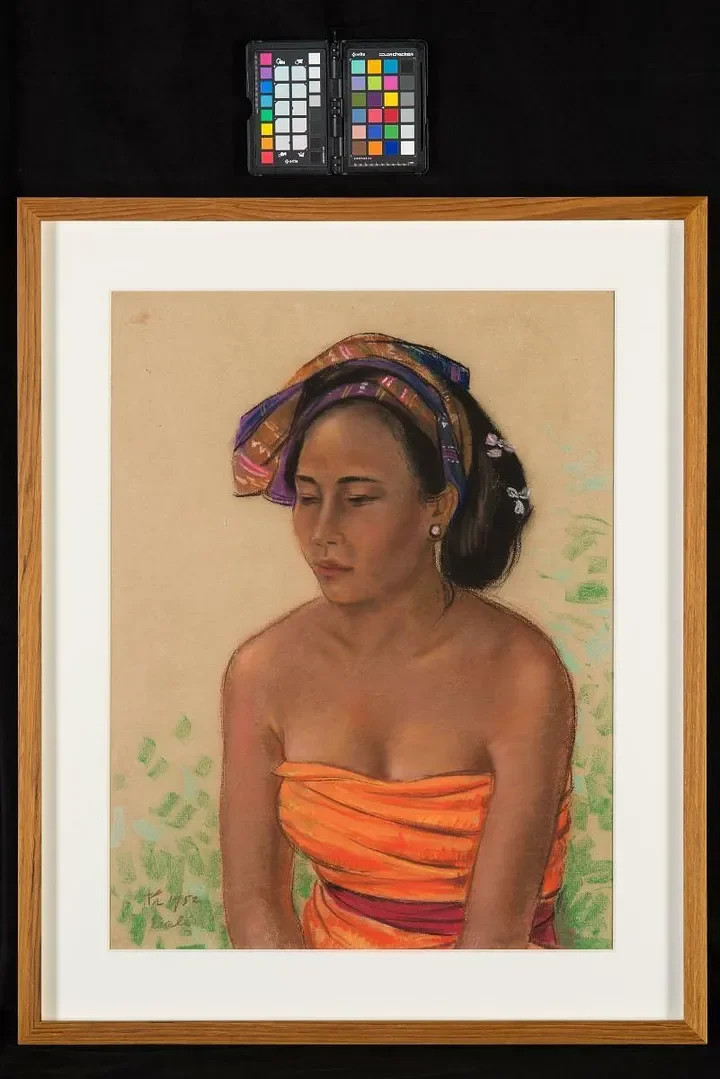
Liu Kang, Portrait of Ni Pollok (Mrs Adrien-Jean Le Mayeur de Merpres), 1952. Pastel on paper, Image size: 60 x 47 cm, Frame size: 74 x 60 cm. (https://www.roots.gov.sg/Collection-Landing/listing/1034227)
The choice of Bali as the destination was not without intention or forethought - there was already an existing body of images and texts, from the Western expatriate community, that would have shaped Liu Kang’s understanding of the region and effected his decision. In particular, the idea of Bali as a pre-industrial and ‘untouched’ tropical paradise had already been well-developed and the prominent presence of the Bali resident Belgian artist Adrien-Jean le Mayeur (1880–1958) as an ushering figure helped spur the four artists to make their visit. By 1952, le Mayeur had already held a number of exhibitions in Singapore,¹⁴ between 1933 and 1941 - many of his works feature a female figure : the much younger Balinese dancer, Ni Pollok, who acted as his muse and, later, became his wife. In fact, during the artists’ time in Bali, they not only met with le Mayeur but also had Ni Pollock, and her friends, model for them. Aptly, Bali presented as an alternative to the Tahitian tropical scenery, with ‘untouched’ landscapes and visions of half-naked women, which was closer to home - in Liu Kang’s view, Bali was the ‘last paradise’.¹⁵
As T.K. Sabapathy has once expounded, “Bali was a nucleus, the site of shared experience and the confluence of historical sources.”¹⁶ Inscribed into Singapore’s art history and our collective imaginations, with almost mystical proportions, the image and impression of Bali has left an indelible mark - one that, in hindsight, carries a rather affected and exoticising connotation. In acknowledging the privileged and all-male¹⁷ position that Liu Kang, and his peers, held as they were deliberately immersing themselves in supposedly unfamiliar and foreign environments, which only appeared so because they were Chinese émigrés and not from the region. In order to generate inspiration for a so-called ‘new form’ of artistic expression - it is clear that the visual output would, to a certain degree, draws on a perceived quality of the ‘exotic’ and an existing representational lexicon and trope. Nevertheless, it is commendable that these ‘pioneer’ artists were making the effort to expand art’s aesthetic and conceptual parameters by choosing to depict the quotidian, anonymous, and everyday. This notably marks a shift from the tendency to reserve artistic expression for the exceptional and reflects some sense of a modernist attitude.
Having been charmed by the ‘primitive’ and inspired by the vibrant colours of Indonesia, the subsequent drawings and paintings produced by the group of artists from their expedition displayed an emphatic emphasis on Balinese craft traditions, ancient spiritual beliefs, the picturesque natural scenery, and nubile young women. In the 1953 essay entitled ‘Trip to Bali’, written in the year following the visit, Liu Kang expressed much admiration for the temperament of the oriental culture and society he had encountered - and a sense of the region as an emblem of exoticism made itself evident in the elements which recur predominantly and expressedly in the resultant body of art.
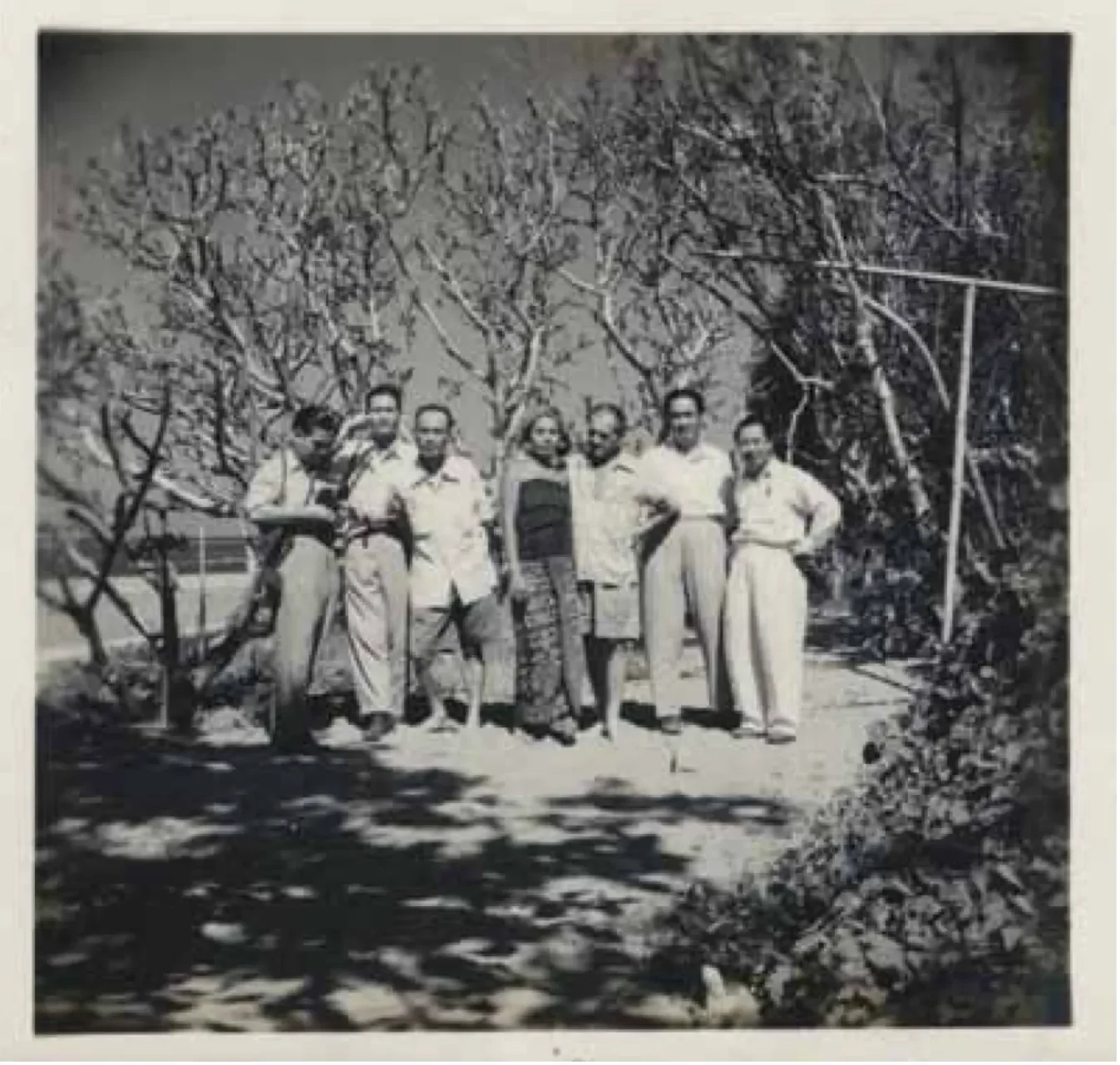
Liu Kang, Cheong Soo Pieng, Luo Ming, Ni Pollok, Adrien-Jean La Mayeur, Chen Chong Swee, Chen Wen Hsi, 1952. Courtesy of Liu Kang Family.
Throughout the tradition of painting, landscapes have long been fecund symbols for nations, typically denoting notions of fertility, abundance - and, as noted by the art historian Roger Nelson, usually depicted as feminine.¹⁸ This frame of thought can be summed up with the artist’s own words as he puts forward the assertion that the human body ‘contains the endowment of nature’ and even took it a step further with the impassioned statement: ‘Anyone who talks about Bali will definitely associate it with half-naked women. Honestly, this is a distinctive feature of Bali.’¹⁹
It is useful, here, to centre an artwork in this discussion — let’s take a closer look at the painting Artist and Model from 1954,²⁰ which typifies Liu Kang as an artist. The canvas, filled with bold, vibrant colours applied in flat and solid blocks, depicts his peer, the artist - Chen Wen Hsi, painting a bare-chested (and unnamed) Balinese woman in a scenic landscape, where a mountain range recedes into the background. Both figures are seated on rattan chairs around a circular table with a red teapot and two matching cups and saucers, contributing to the relaxed atmosphere of the setting. Further, the composition presents an outdoor painting scene, where the artist and subject are situated ‘en plein air’ as opposed to the interior studio, as if to demonstrate the importance that Liu Kang is according to the practice.²¹ “This is a painting about the art of painting,” commented art historian T.K. Sabapathy,²² and as the title suggests, Model and Artist is offering a view of the artist and the process of art making as subjects and expressing some modernist concerns - whilst simultaneously composing a memory from the trip.
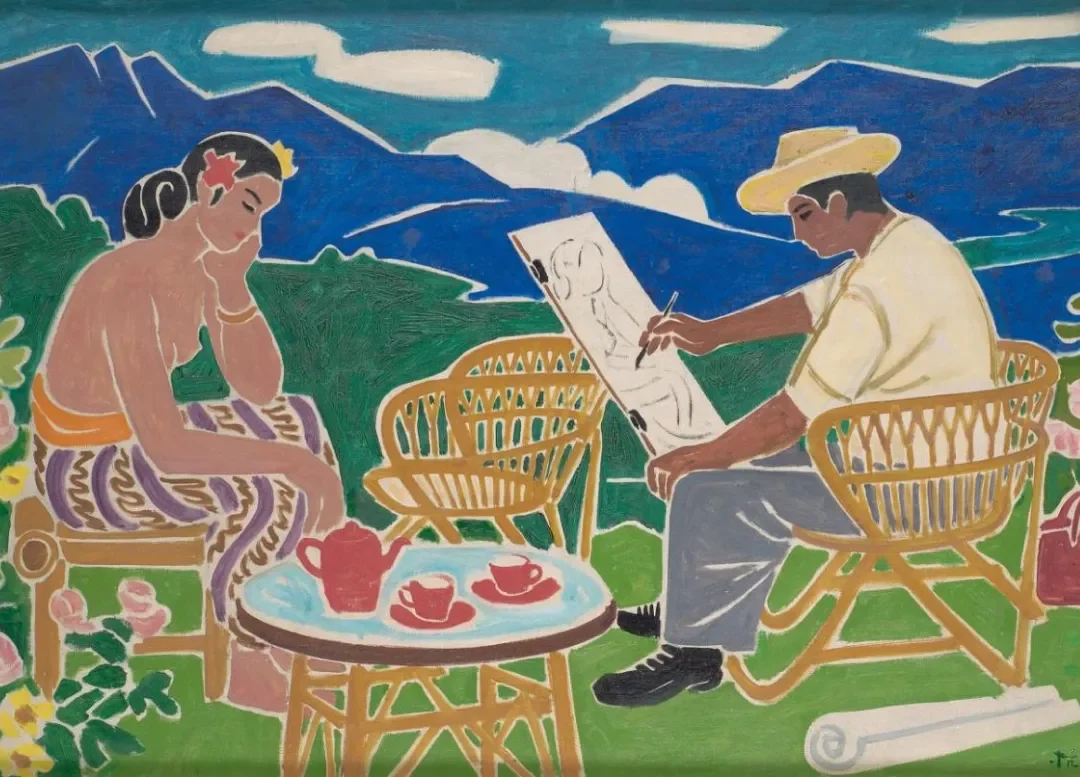
Liu Kang, Artist and Model, 1954. Oil on canvas. 84 x 124 cm. Collection of National Gallery Singapore